


Flashback to the Field: ACK 2006-2007

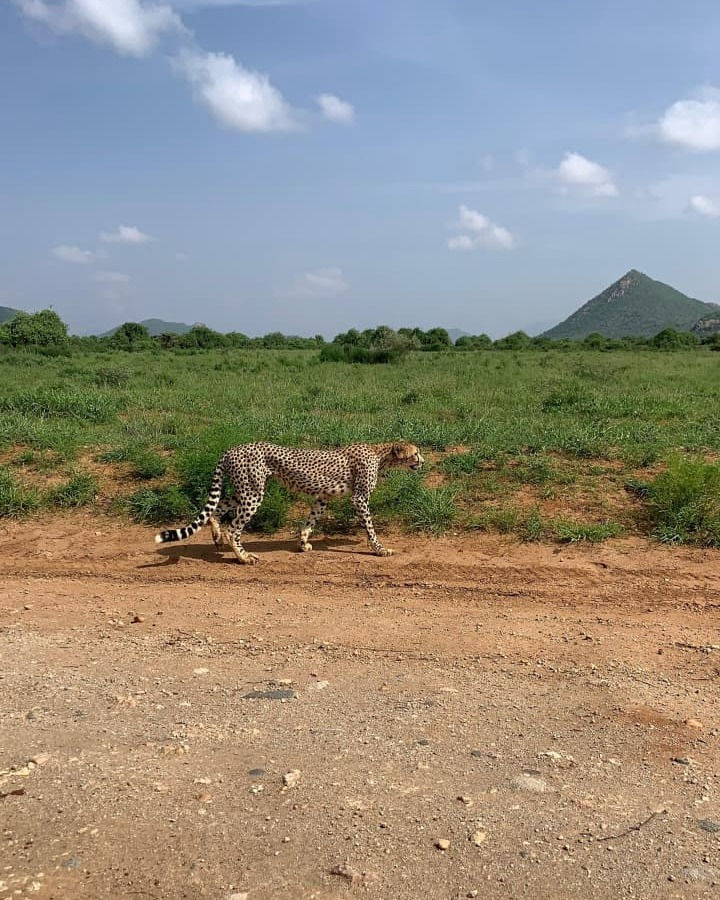
This story is a longer version of our social media awareness campaign for our 50th anniversary. We learned so much about the cheetah's fight for survival in two short years as we launched our studies in the Salama area. In 2006, as we entered our second year of the National Cheetah Survey, we also shifted our focus from the Nakuru area to the Machakos and Makueni region following a call for assistance by David Stanley, a ranch owner in the Salama area, regarding a group of 6 cheetahs. We collared the mother cheetah and one of her five cubs at the end of 2005 - we took a risk in placing a collar on one of the ~12-month-old cubs, knowing that we would

need to monitor his growth carefully to remove the collar if needed. We hired Lumumba Mutiso as a Community Liaison Officer to monitor the collared cheetahs and to collect data to improve our understanding of conflicts reported in the area. In between National Survey field exercises, we worked with Lumumba to set transects for understanding the prey and land use in the region, and provided him with conflict mitigation information to share with farmers about herding, healthy livestock management, and improved livestock enclosures at night.
The ranches around the Stanley and Sons farm were under rapid subdivision, so to keep the cubs safe, the mother was moving frequently into the neighboring Kima Ranch, through the

settlements that were quickly fencing off tracts of land for cultivation, and into the hills of the ranches of Aimi ma Kalungu. The cheetahs moved into the Malili plains and across the Mombasa Highway into the Ulu hills. Our 2006 surveys estimated 29 adult cheetahs to be in the area, and extending into the Athi Kapiti region to the west of the study area.
In the early part of 2006, the collared cub’s signal separated from the mother and was stationary in an area of high buffalo use. We requested the Kenya Wildlife Service to assist in locating the dormant collar, and found that two of the sub-adult cubs were caught in snares

along a fence that was constructed in Kima estate to prevent illegal grazing from the newly settled community. The mother was alone, and the other three cubs were not seen by us again.
Expansion and improvements of the Mombasa Highway meant that traffic was increasing in density and speed, creating a barrier to wildlife movement into the Ulu area, northwest of the highway. On the southeast side of the study area, the Nairobi-Mombasa railway was increasing its traffic to attempt to alleviate the highway traffic jams. The new land owners were quickly fencing and cultivating the area, forming additional blocks to wildlife movement, and increasing poaching of game species – the preferred prey for the cheetahs. Poaching was rampant in the area, with snares

being collected by Lumumba and the ranches at a rate of 10 to 20 per day. While burning to clear a field for cultivation, a fire got out of control, burning a large portion of the Aimi ma Kalungu area in the center of our study area. Calls came in that a mother and 3 cheetah cubs were found in the ashes – Lumumba confirmed the loss.

By the end of 2006, the mother moved across the highway into the Ulu area, and after several months, we saw that she had four new cubs. As the cubs began to follow her, she moved across the busy highway three times in the course of a month. One morning, Lumumba received a call from a traffic officer - two of the cubs had been hit by a vehicle. At four months of age, the two cubs were left lifeless along the highway, but the mother remained near the road with the other two cubs, searching and calling for them. Lumumba
and Cosmas spent three days camping near the highway tracking the mother to see that she was still with the two remaining cubs. Finally, she moved further south away from the highway.
While this was happening, we received a call that another cheetah was snared in the Athi region, bordering the western edge a few kilometers north of our study area. Another call came from East of our study boundary that there was a dead cheetah found in a field. We went there to find a female cheetah with a poison arrow. In a necropsy at KWS, we found this female to be pregnant with six cubs. Both of these cheetah mortalities were outside of the area we were working, evidence of the impact of land-use change and human-wildlife conflict. Additionally, between 2005 and 2007, between Kima Estate and Kuymvi – a 50 km stretch of Mombasa Highway, three adult and two sub-adult cheetahs were killed, one also pregnant with six cubs. In the course of 3 years, between 2005 and 2007, seven adult cheetahs, five subadults, four cubs and 12 unborn cheetahs (27 in total) lost their lives in an area of heavy development and land-use change.
We worked with KWS to hold community meetings, establish awareness programs for schools, and initiate environmental programmes targeting all age categories, genders, and socio-economic groups. The greatest challenge in the area was the rapid and unregulated development of small-scale farming that was fast taking over the vast landscape that was once well-managed cattle rangeland in harmony with wildlife.


Comments